
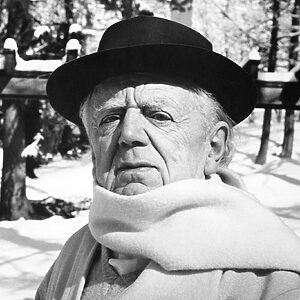

Philipp HARTH is born on July 9th in Mainz, the second of 5 children of the lithographer Adam Harth and his wife Katharina.
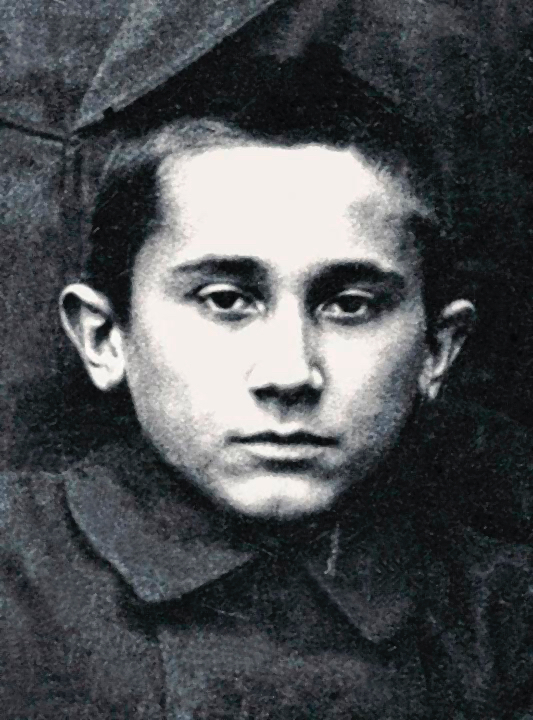
During his school years, the friendship deepens with the later theologian and philosopher of religion Romano GUARDINI (1885-1968), whom he knew from early childhood days.
„I was happy to have met a boy who shared my interests...“ Ph.H.
Due to his increasingly strong interest in art and art history, he prematurely ends his apprenticeship as a lithographer and visits the city library almost daily to study art historical periods.
„What I was getting to know felt like access to the beauties of the world...“ Ph.H.
At the age of sixteen, HARTH meets his future wife Ida ZUR NIEDEN (1886-1981).
HARTH participates in the competition “Views of Old Mainz” and wins 1st prize. The prize money allows him a six-month educational trip to the cathedrals and ecclesiastical buildings of Andernach, Maria Laach, Worms, Speyer, Strasbourg, Colmar, Zurich, Basel, Augsburg, Nuremberg, Würzburg, and Bamberg.


He entertains the thought of becoming a master builder of cathedrals.
During a several-week study stay with the graphic artist and Art Nouveau painter Heinrich VOGELER in Worpswede, eighteen-year-old HARTH meets the poet Rainer Maria RILKE and his wife, the sculptor and later painter Clara WESTHOFF-RILKE, the writer Heinrich MANN, as well as the painter couple Otto MODERSOHN and Paula BECKER-MODERSOHN.
Studies at the School of Applied Arts in Mainz, further studies at the Grand Ducal School of Applied Arts in Karlsruhe.
He studies figure drawing with Prof. August GROH, life drawing with Hermann STRÜBE, and decorative painting with Prof. Karl EYTH.
Subsequently, HARTH attends the Obrist-Debschitz art school in Munich.
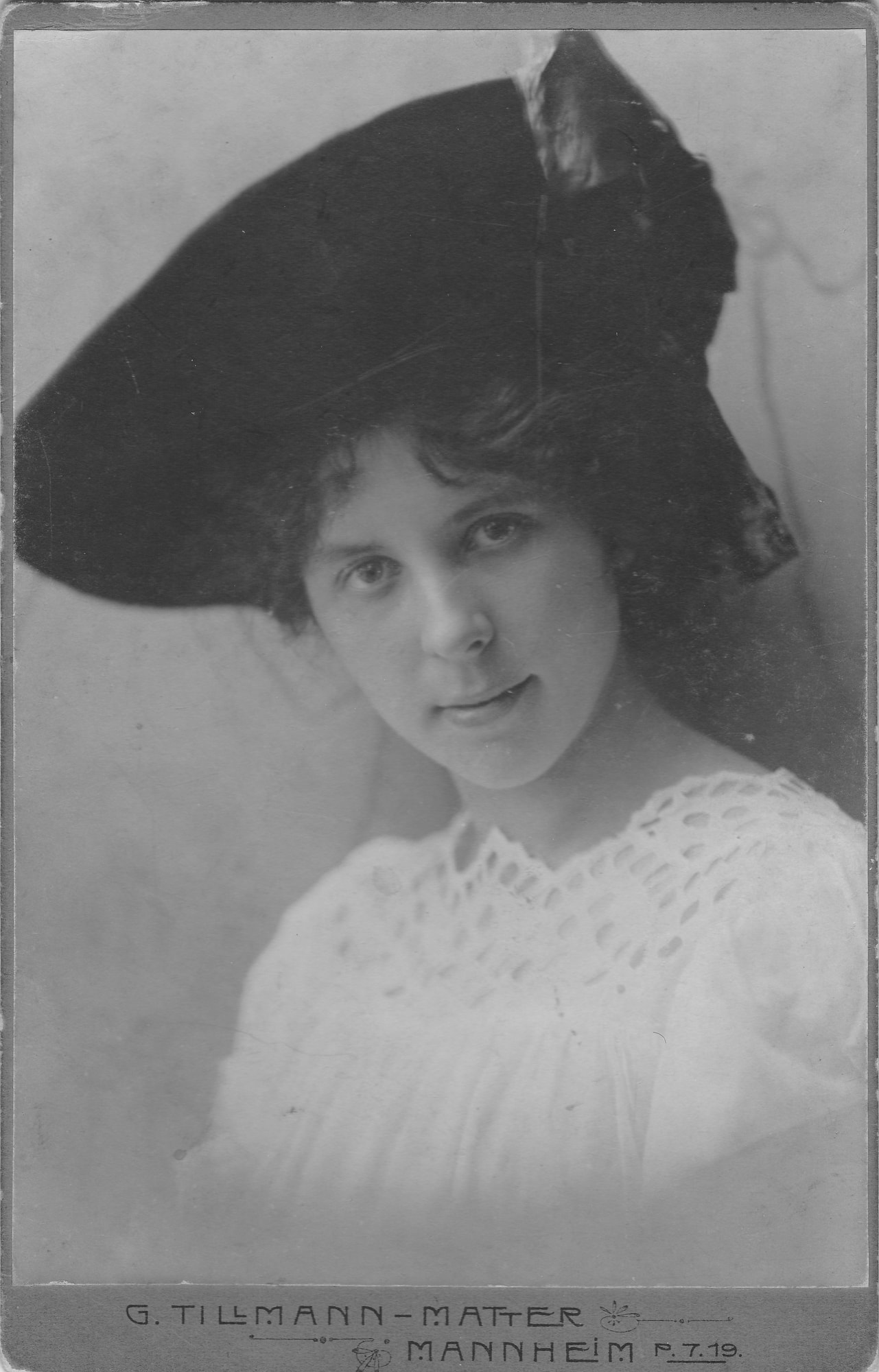
On September 19, 1908, Philipp HARTH marries his childhood sweetheart from Mainz, the later opera and concert singer Ida ZUR NIEDEN.
HARTH attends the teaching institution of the Prussian Museum of Arts and Crafts in Charlottenburg as a student and takes the course on Figurative Modeling with Walter SCHMARJE, later with Johannes RÖTTGER.
Ida completes a three-year vocal training at the University of Music and Performing Arts.
„Like two school children, we now went to school in the morning, he to the School of Arts and Crafts, I to the University of Music...“ Ida HARTH ZUR NIEDEN

On the recommendation of architect Peter BEHRENS, HARTH receives a position
and practical training as an architect under Hermann MUTHESIUS.
„Since I am architecturally gifted, Behrens and Muthesius encouraged me to become an architect. Muthesius personally wanted to train me as an architect; he took me into his studio.... However, six months before the war, I became a sculptor again.“ Ph.H.
To preempt a conscription, HARTH volunteers at the onset of war and is assigned as a cartographer.
During the Second Battle of Flanders at Ypres (April 1915), HARTH is wounded in the head and suffers for years from the effects of the chlorine gas attack. After several stays in military hospitals, he is released from military service in the second half of 1916, severely affected by the war.
„I creep in my worn-out uniform along the street to your apartment, wondering if I will ever again be the person I once was...?“ Ph.H., letter from Mainz to Ida, 1916
Beginning of a lifelong friendship with the reform pedagogues and founders of the Odenwald School, Paul GEHEEB and Edith GEHEEB, née CASSIRER. They repeatedly offer him temporary positions as a teacher for art education at the Odenwald School/Oberhambach. HARTH meets the theologian and philosopher Christoph SCHREMPF there.
HARTH undertakes several study trips to Cologne, Hamburg, Paris, and Rome.
HARTH spends an extended period at the main stud in Trakehnen, East Prussia, to thoroughly study the behavior of horses.
„... so much goes on in me, an inexhaustible source for me, each of these beings captivates me in its existence, it feels as if my gaze penetrates deep into being...“ Ph.H.
HARTH continues his studies at the Arts and Crafts School in Charlottenburg.
He takes life drawing and modeling courses with Wilhelm OTTO and attends the specialized class in wood sculpture with Prof. Hans PERATHONER, who greatly impresses HARTH. Additionally, he attends lectures by art critic Max DERI and participates in the completion of the KRUZIFIXUS by Ludwig GIES.
FAMILY AT THE DINNER TABLE, wood relief, walnut; also as bronze relief
This wood relief is created under the direct influence of the war.
“It depicts the inner states of the family, the mother and the sons who have returned home for a short time. ... All of this is captured in a moment of supervision and shaped with the knife such that the fantastical has truly become real, that a suprarational process is made visible and tangible. ... A piece of wood, more accusatory and shocking than the loudest programs. ...” Fritz NEMITZ, art historian,
LYING MAN, wood sculpture, lime wood
During this period, a circle of friends forms with artists Werner GILLES, George GROSZ, Emil VAN HAUTH, Erich HECKEL, Else LASKER-SCHÜLER, Alexej VON JAWLENSKY, Leo VON KÖNIG, Georg KOLBE, Emil NOLDE, Emy ROEDER, and Karl SCHMITT-ROTTLUFF
First significant exhibition participation “GERMAN EXPRESSIONISM” in Darmstadt with FAMILY AT THE DINNER TABLE
“The “Family at the Dinner Table” not only shows a German but also representatively a European fate. Thus, a world truly fell apart. This relief is one of the few authentic works of German Expressionism.” Prof. Friedrich GERKE, art historian, 1962
In Berlin, the following are being created:
KRIPPE, wooden sculpture, lost in World War II.
„...An old familiar story (...) has found a new storyteller who enriches it in his own way with his own nuances...“ Paul Westheim, Das Kunstblatt, 7/1923
TWO RESTING SHEEP, bronze, small sculpture from the KRIPPE
THE THINKER, wooden sculpture, lime wood, lost in World War II
Portrait of the religious philosopher Christoph SCHREMPF
Death of Father Adam HARTH
PIETA, wooden sculpture, oak wood, lost in World War II
„The PIETA, with its cubic emphasized forms set against each other and its intense, intertwined movements, is once again an exceptionally 'expressive' work... The deep seriousness and special significance of this meaning may become even clearer when one learns that shortly before, the father had died in the arms of his son Philipp.“
Dr. K. H. ESSER, Catalog, Mittelrhein. Landesmuseum Mainz, 1974
multiple study trips to Hamburg, Paris, and Rome
„...So I would like to mention first that I work solely from memory; I never draw studies directly from nature, but later from recollection.“ Ph.H., Thoughts on sculptural design, 1924-34
HARTH primarily dedicates himself to ANIMAL SCULPTURE
“When I think back, I only looked at a few animals. But for me, it is God and the entire world that I can capture here with my eyes. It doesn't matter from which corner the world unfolds. Cézanne was satisfied with a few apples and some bowls...” Philipp Harth, letter, 1930
In the Odenwaldschule/Oberhambach, the following works are created:
HORSES IN THE MEADOW
hammered and cut copper plate, also as a bronze relief
COWS IN THE MEADOW
hammered and cut copper plate, also as a bronze relief
HARTH rents a studio room in Schwaz/Tirol on the recommendation of city councilor Max CASSIRER in the workshop of the God-carver Franz KOBALD and works there for extended periods as a freelance sculptor.
“I particularly enjoy working with KOBALD, I couldn't have found anything more beautiful anywhere else...” Ph.H., 1926
Frequent trips to Wiesbaden, where Ida HARTH ZUR NIEDEN was engaged as a mezzo-soprano under General Music Director Otto KLEMPERER at the State Theatre from 1925 to 1930.
Friendship with the painter Alexej VON JAWLENSKY until his death.
„...I greatly admire your art. Your camel is my favorite...“
Alexej VON JAWLENSKY
Studios in Wiesbaden: Wilhelmstraße/Corner Taunusstraße and
Corner house Mosbacherstraße/Alexanderstraße
In Wiesbaden, the following were created:
DROMEDARY, bronze sculpture
„...This free sculpture marks the beginning... of a sculptor who since 1925 was to develop into the most significant animal sculptor of our richly endowed century. ...“ Museum Director Dr. Ulrich Schmidt „The Symbol of Eternity on the Back“, in: Museum Wiesbaden, 1975
DROMEDARY HERD, walnut relief (lost)
„What creatures! They chose the desert as their habitat... on their backs, these animals carry the symbol of eternity, a pyramid... “ Ph.H., Letter to Paul Geheeb, 1927
WALKING DONKEY
Bronze, small sculpture
LITTLE DUCK
Bronze, small version
DUCK
Bronze, large version
Commission from the House of Press, Berlin, as „Press Duck“
Reliefs of the Evangelist symbols hammered in brass,
later in bronze
Commissioned work for door handles of a church portal
ANGEL - Matthew
LION - Mark
OX - Luke
EAGLE - John
Ministerial Councilor, art collector, and art writer
Bronze, large sculpture
ADRIANI acquires the EAGLE and gifts the sculpture to the American poet Robinson JEFFERS. Since 1949, it has been located on the grounds of the 'Tor House Foundation', Carmel, California.
“The gaze of this eagle is unforgettable. The proud self-awareness of unbroken strength; the solitary dignity of a royal being. ... ” Bruno Adriani, letter, 1939
ADRIANI publishes the monograph 'Philipp Harth' in 1939
In Schwaz/Tyrol, the following are being created:
SCHWAZER "BLACK SERIES"
CREEPING LEOPARD
Bronze, Small Sculpture
SITTING JAGUAR
Bronze, Small Sculpture
STANDING TIGER
Bronze, Small Sculpture
ATTACKING TIGER
Bronze, Small Sculpture
TIGER
Marble relief (missing)
PLAYING JAGUARS
Bronze relief
"In the presence of the playful, battling jaguars... so much activity, drama, and vitality emerge that all other life seems pale by comparison. Bringing this liveliness into a harmonious formal unity fulfills my imagination." Philipp Harth, Letter, Schwaz, 1932
In Berlin, the following are being created:
YOUNG BULL
Bronze
DOUBLE SNAKE
Gray sandstone, relief (missing)
DEER
Gray sandstone, relief (missing)
CHIMERA
Gray sandstone, relief (missing)
LEOPARD, LICKING ITS PAW
Bronze, Small Sculpture
"... And with a calmness, as if I had been tasked with completing only this one small sculpture in my life, I looked at my work again with my eye, slightly altering one surface in relation to another, rounding a line sensually, and constantly trying to concentrate the overall formal harmony even more strongly as a unit. What I am currently working on is succeeding..." Ph.H., Letter to Ida, 1932
HARTH becomes a member of the Berlin Secession
Exhibition at the New Pinakothek, Munich:
BERLIN ART IN MUNICH
HARTH'S large sculpture EAGLE is confiscated as degenerate.
„ ... You have probably heard from Edith that my work was removed from the Munich Art Exhibition; the same sculpture, a cast of the eagle, was purchased yesterday by the Folkwang Museum. There is much talk and laughter about this case...” Philipp Harth, letter to Paul Geheeb, 1935
Death of mother Katharina HARTH
HARTH receives the VILLA ROMANA PRIZE from the German Artists' Association.
Half-year study stay of the Harth couple at the Villa Romana in Florence.
At the Villa Romana, the following are created:
STRIDING TIGER
bronze sculpture, small sculpture
RESTING TIGER
bronze sculpture, small sculpture
Other plaster models of predator sculptures (see studio photos) were broken during transport to Germany.
In Berlin, the following are created:
TIGER
bronze, large sculpture, life-size
„With this first real monument, he not only achieved a similar success as with the 1930 created „Snarling Jaguar“, but has definitively established his reputation as one of the leading animal sculptors capable of truly monumental achievements...” Dr. K. H. Esser, Animal Sculptures and Drawings, Catalog of the Middle Rhine. State Museum Mainz, 1974
HORSE GROUP
Bronze, large sculpture, life-size
Commissioned by the city of Essen
„...The oversized horse group (...) is almost complete. I built this work large without a small model, as I work entirely from memory (...) I stood on the ladder for months and carried plaster on...” Ph.H, 1938
The art historian and art collector Bruno ADRIANI publishes the monograph “Philipp Harth”.
STANDING STORK, Bronze, large sculpture
WATER HORSE, Bronze sculpture for fountain installation
Bronze, large sculpture, life-size
„... Harth is an animal sculptor. The knowledge of the strength and size of the three-dimensional sculptural form is combined with a wise empathy for the soul and habits of the animal. ...” Egon A. Joos, Allgemeine Zeitung Mannheim, 15.10.1957
RUNNING ELEPHANT
Bronze, small sculpture
ELEPHANT
Bronze, small sculpture
STANDING SWAN
Bronze, small sculpture
SLEEPING SWAN
Bronze, small sculpture
„... The slight movement of the neck, the head turned towards the wings, resembles a quotation from a living creature. ... This sculpture embodies movement in stillness...” Dr. K. H. Esser, Philipp Harth – Animal Sculptures and Drawings, Catalog of the Middle Rhine State Museum Mainz
ANGEL
Bronze relief for the grave of a child
„I have drawn the design of the angel once again. The angel ascends, cradled in his hands is the invisible being, which he lovingly protects.” Ph.H., Letter to Ernst Färber, 1948
STANDING GIRAFFE
Bronze, small sculpture
WALKING GIRAFFE
Bronze, small sculpture
HERON WITH OUTSTRETCHED WINGS
Bronze, small sculpture
SWIMMING SWAN WITH STRAIGHT NECK
Bronze, small sculpture
SWIMMING SWAN WITH CURVED NECK
Bronze, small sculpture
DANCING DONKEY
Bronze, Small Sculpture
DONKEY
Bronze, Large Sculpture
HERON
Copper Sheet, Large Sculpture, handcrafted
„...The Great Heron is an exceptional work because it was handcrafted by the artist in copper, which is already a remarkable achievement from a purely artisanal perspective...“ Wolfgang Venzmer, Philipp Harth – Notes on the Work, Catalogue Mittelreihn. Landesmuseum Mainz
HERON
Bronze, Large Sculpture
HERON
Bronze, Medium Version
STORK WITH TURNED HEAD
Bronze, Small Sculpture
STORK WITH BENT HEAD
Bronze, Small Sculpture
STORK WITH LOWERED HEAD
Bronze, Small Sculpture
INDIAN BULL WITH STRAIGHT HEAD
Bronze, Small Sculpture
INDIAN BULL WITH TURNED HEAD
Bronze, Small Sculpture
YOUNG PELICAN
Bronze, Small Sculpture
HARTH expands his studio house
Active exchange and visits from artist friends:
Werner GILLES, Emil van HAUTH, Jürgen KALLMANN, Kurt KYRISS, Kurt LEHMANN, Emil NOLDE, August RIEDEL, Emy ROEDER, Gustav SEITZ
WOLF-CHIMERA
Bronze, large sculpture, life-size
Commissioned by the city of Mannheim for a fountain installation:
PELICAN WITH HEAD LOWERED
Limestone sculpture, large sculpture
PELICAN WITH TURNED HEAD
Limestone sculpture, large sculpture
PELICAN WITH HEAD RETREATS
Limestone sculpture, large sculpture
The three sculptures also as bronze sculptures.
„...When freely chiseling, the work is always in a dynamic flow, in an inspiring state of imagination. Boldly daring at every moment, the achieved unity of form is constantly shattered as the created is struck away from layer to layer, only to emerge anew. The experiences of formed effects enrich the individual designs through ongoing recreation, leading to an ever-greater experience regarding the harmonious unity of form. ...“ Philipp Harth, Thoughts on Sculptural Design, 1967
Bronze, small sculpture
FOUR PELICANS
Bronze relief
PELICAN ON COPPER SHEET
Copper sheet, hammered
TWO PELICANS
Copper sheet, hammered
PELICAN WITH RETRACTED NECK
Bronze, small sculpture
PELICAN WITH HEAD RETREATING
Bronze, small sculpture
STANDING PELICAN WITH CURVED NECK
Bronze, small sculpture
STANDING PELICAN WITH CURVED NECK
Bronze, medium version
Cornelius Prize of the City of Düsseldorf for Sculpture
PELICAN, WINGS SPREAD
Bronze relief
PELICAN WITH RETRACTED BEAK
Bronze relief
PELICAN
Bronze, Plaque
Bronze, Large sculpture
„...In Bayrischzell, he turned to pelicans, storks, and swans. His „Walking Storks“ became two contemplative philosophers wandering silently side by side... “ KB, Philipp Harth, Master of Animal Representation
„...Here is a sculptor for whom the pure art of sculpting in its true and original meaning is a serious and primary concern, who measures in omission and addition (...) I saw and experienced hardly anything better from our time and nowhere so unified...“ Gustav Seitz, Philipp Harth – Catalog of the Kunsthalle Mainz, 1957
PLATE WITH HERON
Hammered copper
PLATE WITH FISH
Hammered brass
BOWL WITH SWAN
Wood relief, Bronze relief
BOWL WITH YIN-YANG SYMBOL
Hammered brass
BOWL WITH SLEEPING SWAN
Bronze relief
BOWL WITH INFINITY SYMBOL
Hammered brass
TRAY WITH SNAKE HANDLES
Hammered brass
HARTH undertakes numerous art trips with study stays in the great zoological gardens of Europe.
STORK AND STORK GIRL
Bronze, Large Sculpture
FIVE STORKS
three standing, two walking, one lying
Bronze Relief
FOUR STORKS
three standing, one lying
Bronze Relief
„...it is not the Existentia, but the Essentia of the creature that is made visible here in full clarity. The capturing and shaping of essence... is nothing other than the artistic expression and self-presentation of a humanity matured to deep inner fullness and perfect wisdom...” Walter Passarge, 1957
Paul Geheeb, a reform pedagogue and founder of the Odenwaldschule, comes for a six-month visit to Bayrischzell.
Awarding of the Art Prize for Sculpture from the State Government of Rhineland-Palatinate.
FLAX BOWL WITH PELICAN AND TWO YOUNG ONES
Bronze
PLAQUE WITH PELICAN AND PAPYRUS
Bronze
PLAQUE WITH PELICAN WITH SPREAD WINGS
Bronze
THREE PELICANS
Bronze Relief
FOUR PELICANS in various positions
Bronze Relief
Renewal of youth friendship between Philipp HARTH and the religious philosopher Prof. Romano GUARDINI (1885-1968).
„He is a wonderful man. We have been childhood friends. We met in a society some time ago, and our former friendship has been renewed in the most beautiful way. Guardini dedicated his last book to my wife and me.” Ph.H., letter to Leo Habig, 1961
TWO PELICANS
Bronze relief
SIX STORKS
Bronze relief
FIVE SWANS
Bronze relief
STANDING DONKEY
Bronze, small sculpture
DONKEY
Bronze relief
FIVE SWANS
Walnut relief and bronze relief
SIX STORKS
Walnut relief and bronze relief
FOUR STORKS
two lying and two standing
Bronze relief
PLAQUE WITH PELICAN
small version, bronze and iron
The painter Jürgen KALLMANN portrays Philipp HARTH and Ida Harth ZUR NIEDEN.
FOUR STORKS AND TWO STORK HEADS
Bronze relief, engraving technique
HARTH receives the art award of the city of Mainz on the occasion of the 2000 year celebration
THINKING LION
Limestone sculpture
THINKING LION
Bronze, small sculpture
WALKING LION
Bronze, small sculpture
WALKING LION
Plaster model
WALKING LION also "BERGISCHER LÖWE"
Bronze, large sculpture, lifesize
Installed for the 650th anniversary of the city of Düsseldorf, Königsallee
Commission from the city of Hamburg for the Mönckeberg Fountain:
STANDING LION
Bronze, large sculpture, lifesize
Bronze, large sculpture, lifesize
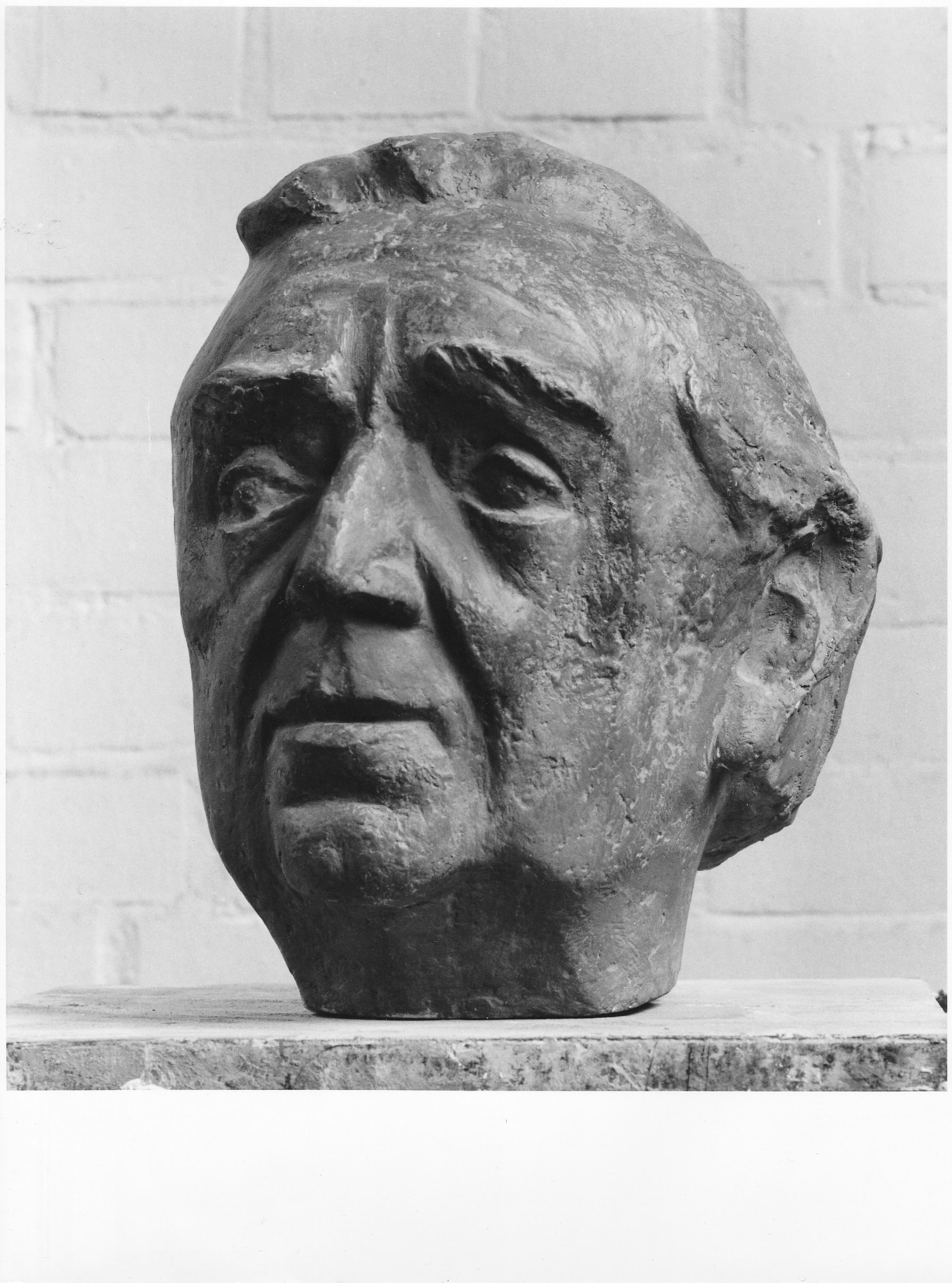
models a portrait of Philipp Harth, Bronze
HARTH is appointed as an honorary member of the Academy of Fine Arts Munich.
Honor bestowed upon HARTH by the city of Mainz and presentation of the Silver City Crest.
THREE CAMELS
Bronze relief
Death of friend Romano GUARDINI, October 1
PHILIPP HARTH dies on December 25 at the age of 83 in the Atelierhaus Bayrischzell due to a heart failure.
The Grand Federal Cross of Merit, which was available in January 1969, cannot be awarded posthumously.
Ida HARTH-ZUR NIEDEN manages the artistic estate together with her family and organizes numerous exhibitions.
She publishes essays and drawings in collaboration with Hans Waltmann, the publisher of Romano Guardini.
She receives the Federal Cross of Merit.
Ida HARTH ZUR NIEDEN dies on May 26, 1981, at the age of 94.
You are currently viewing a placeholder content from Vimeo. To access the actual content, click the button below. Please note that doing so will share data with third-party providers.
More InformationYou are currently viewing a placeholder content from YouTube. To access the actual content, click the button below. Please note that doing so will share data with third-party providers.
More InformationYou need to load content from reCAPTCHA to submit the form. Please note that doing so will share data with third-party providers.
More InformationYou are currently viewing a placeholder content from Google Maps. To access the actual content, click the button below. Please note that doing so will share data with third-party providers.
More Information